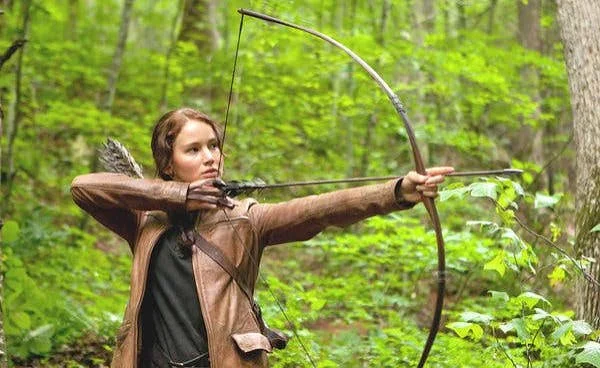
The Hunger Games, Almost Twenty Years and Two Prequels Later
Nearly twenty years after The Hunger Games first captivated readers, Suzanne Collins’s dystopian series remains as relevant and intricately constructed as ever. Beneath the memes, elaborate costumes, and movie hype lies a thoughtful exploration of propaganda, political power, storytelling, and the small acts of kindness that can change the world. Rich with references to classical literature, poetry, and history, the books offer plenty for readers and students to discover with each rereading. As a new film brings Panem back into the spotlight, it is worth remembering that the franchise is neither entirely serious nor merely silly. Few stories capture the imagination of an entire generation without having something meaningful to say.
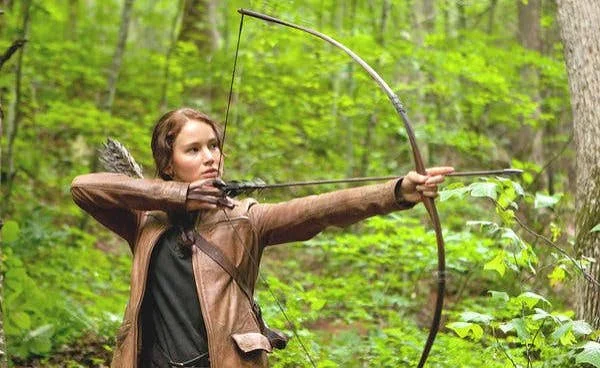
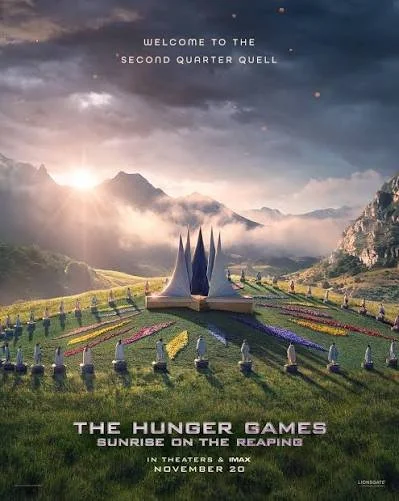
If your social media feed is anything like mine, Panem and its cast of characters have shown up a ton. Only recently, each of the movies revisited theaters. In about three weeks on November 20th, the latest installment hits the silver screen.
So many fans are getting wrapped up in the pomp and circumstance of the movies and its quite lovingly woven press tour. Genuine, real deal Hunger Games fan and confirmed Everlark shipper McKenna Grace has been throwing looks referencing everything from the movie’s settings to Katniss’s Catching Fire wedding dress and more. Her co-star Joseph Zada’s mannerism in red carpet interviews have become memes themselves. People ruminated on potential deliciously-in-poor-taste keepsake popcorn buckets, everything from a murderous gumdrop to an equally sinister squirrel.
The Hunger Games have always been a quite unique fandom. Saying you are looking forward to the new Hunger Games could so easily be misinterpreted in a horrifying way. So much of the books are about how storytelling and showmanship can be used to manipulate people, yet a part of the fandom’s fervor will always be about the surface (or seemingly surface) stuff—the memes, the beautiful gowns, the funny bits. It is a part of the whole picture, and if it was doom and gloom all the time people couldn’t listen. But there is so much else going on here.
I believe that The Hunger Games books are the most important books released in this century. It has a strong claim to the spot, at least. That a YA book and a piece of (gasp) genre fiction can grasp at that honor is quite the feat. The books are as intricate and well-woven as they are influential and talked about.
I am glad to see that The Hunger Games are quickly becoming a key part of both high school and college curriculums. I wonder how long it will be before a Norton Critical Edition? Less than twenty more years, I’d suspect, if Scholastic allows it. There are several teaching guides already on the market. I hope this love for The Hunger Games continues—that one day it is as ubiquitous as something like The Great Gatsby or Huckleberry Finn are. It has just as clearly telegraphed, essay-question-able symbols as they have. Maybe, one day, knowing what the flowers and the favorite colors in The Hunger Games mean will be as no-brainer as knowing what the green light means in Gatsby.
The books are in conversation with key parts of our past and present, both in a fictional sense and in terms of our actual history. Collins sprinkles references to Ancient Greece and Rome throughout. Stitched into all the books—but especially the two prequels—is a deep love for both song and poetry. The Ballad of Songbirds and Snakes has a deep relationship with the William Wordsworth poem “Lucy Gray,” and Sunrise on the Reaping has a similar symbiosis with “The Raven” by Edgar Allan Poe. When it comes to folksongs, both those cribbed from real life and ones Collins congers on her own, she shows a deep respect for how ballads can connect others and how they hide verboten messages in plain sight.
From Shakespeare’s Coriolanus to Thomas Hardy’s Far From the Maddening Crowd to Plutarch’s Parallel Lives, the series is in conversation with so many literary treasures—not to mention its ties to philosophy and political science. Reading the series alongside its influences could make for a great (and demanding) college course.
It feels odd to think that a series like this was so popular, that it held the imagination of my whole generation at one time, that it was so widely read and watched. The story is so violent and the world it inhabits is so bleak and unforgiving. Katniss is guarded to the point of being unlikeable to some. Haymitch’s life is thrown into a pit of despair. The Ballad of Songbirds and Snakes stars a pompous, entitled coward. Nothing about it screams “popcorn movie.”
There is something about the characters in these books, and the societies they inhabit that feel deeply real. ‘The Hunger Games’ are a humiliation ritual, a scare tactic, entertainment, and a declaration of ownership all at once. Everyone, from those pampered in the Capitol to the unfortunate child sacrifices, all feel so deeply desperate. There is so little compassion to go around, but little acts of kindness and connection are still present. People so discarded also read as so vivid.
The sickeningly sweet colors in the new Hunger Games arena, the poison paradise, are such an apt way to show how deceiving appearances can be. But that is only how things are when turned up to 11.
Everyone writes their own story and paints their own portrait of who they are. How you dress, how you spend your time, what you say and how you say it—all of it has an impact. Katniss took down the Capitol mostly with just a bouquet of flowers, a handful of berries, and a song. The three-finger salute starts out as a funerary tradition rather than a battle cry. For Katniss, even her most earnest words and gestures become propaganda for the rebels—who are not as innocent as they seem. In this world that says we need to keep talking, keep posting, keep promoting, keep dancing around, it is a good reminder of how much of that impulse is not quite right. But you can’t stop doing meaningful things either. There is no middle ground. Not acting is still an action.
In November, I will for certain go to see the new movie. The prequels feel special since the happy ending, er—bittersweet ending—, is in-universe decades and decades from coming to pass. Stories for young people aren’t supposed to end in defeat—that is so rare. So much of Haymitch’s life gets caught up in self-destruction and wasted potential. Katniss and Peeta are only marginally better off.
There are going to be tears and there are going to be thrills and there are going to be iconic lines. It will be difficult to see someone so earnest fail so spectacularly. Those who have read the trilogy but not the new book will discover whole new tragedies in this poor drunk’s life—some awful surprises.
But, eventually, it all works out. There is a new Spring day and there are new geese to cherish. It takes several more decades, but things are set right (or right enough) again. The Hunger Games can’t even outlast Snow’s lifetime.
If Haymitch got a bit less wrapped up in his technical goal and more into protecting the newcomers, maybe everything would be different. The beautiful, hideous distraction machine that is the Hunger Games ended up eating itself, because cameras were aimed at people who didn’t behave. People who refused to kill each other or view the death of another person as a small matter. And Snow had the idea of pointing the cameras so ardently in the first place, built his career on making the Hunger Games more key part of statecraft. He reaped what he sowed.
It is not 2008 anymore, or 2012. Teachers reading this alongside their high school students are working with kids about as old as the series itself is. Time has changed things. I am glad we have all collectively moved past the TeamGale and TeamPeeta debate, and that Peeta’s strengths as a character are properly respected. Katniss is a deeply private person and has hang-ups about romance due to her neglect as a child, there are bigger picture character reasons for the love triangle. No longer do we say “May the odds be ever in your favor,” to wish good luck for something as banal as a test or for a scratch-off.
But the media buzz feels similar. It is ok to want to watch the Hunger Games because they are made up. McKenna Grace reveled in wearing a dress that Katniss was forced to wear—and it looks great on her. She made lovey-dovey video edits of the best romantic moments in the movies, too, and that’s ok. The Hunger Games franchise is neither completely serious or completely silly. It could not survive along such absolute lines.
But that doesn’t mean it is vapid teenybopper nonsense. Things are seldom that simple, anyway. Things that capture the hearts and minds of so many people rarely are.
If you hustle, you can read the new book before the movie comes out. I ended up listening to the whole series in release order earlier this Summer through my Libby app, and that is also an option if you hurry. All of the characters and storylines feel more fleshed out years later.
Each of the Hunger Games books star a narrator who greatly influences what we know and how we know it, what we see and how it feels to us. Haymitch has a bit less of a pressing presence on his narrative as Katniss or Snow did, but he’s still there, adding his own spin to everything. In light of this, of course things will change. I hope I’ll have a nice time even if I end up liking the book better than the movie. It will be food for thought, at least.
I am wondering how they are going to incorporate ‘The Raven’ into the film? Maybe they aren’t going to? That would be a shame even if it is deemed necessary. A YA dystopia of all things helped me appreciate the difficult emotions within this classic piece of literature. It breathed new life into something I couldn’t quite access before.
If Collins writes about Panem again, I wonder what new piece of literature she will bring into the conversation and introduce millions of kids to? And what about the book itself? Maybe a book set in one of the more favored, more loyalist districts like District 1 or 2? There may be practical, completely understandable hurdles to writing an age appropriate Finnick book, even if so many fans want to know more about the character.
I wonder what Enobaria’s deal is….
And what sort of inevitable problems does this fledgling, vulnerable democracy face early on? Will we ever figure out what happened to the US prior to Panem and the districts?
So, what is your favorite symbol in the Hunger Games franchise? Mine is probably the pearl that Peeta gives Katniss in the Quarter Quell. But Buttercup the cat is a close second. What is your favorite intricate detail?
I wonder how much of Haymitch’s backstory and the 50th Hunger Games was already locked away in Collins’s mind when writing the original series and how much was built around the book’s current landscape after the fact? So many series include easter eggs that feel kitschy or like they are jumping up and down for attention, but here it felt genuine and honest.
So many questions, many of which can’t even be cracked at yet.
What is your favorite part of the world of Panem? Are you excited for the new movie?
What’s the Deal with Dialogue Tags?
In the world of copy editing and line editing for fiction and creative nonfiction, professionals are moving away from attacking anything unusual or not completely buttoned up with red pens. At the same time, there is one convention that seems to stick around. It may be time soon for people move away from an overly-prescriptivist view of dialogue tags. How to handle dialogue tags are a hard-and-fast rule in a space that is not supposed to have hard-and-fast rules. Rarely has much thought has been put into why.
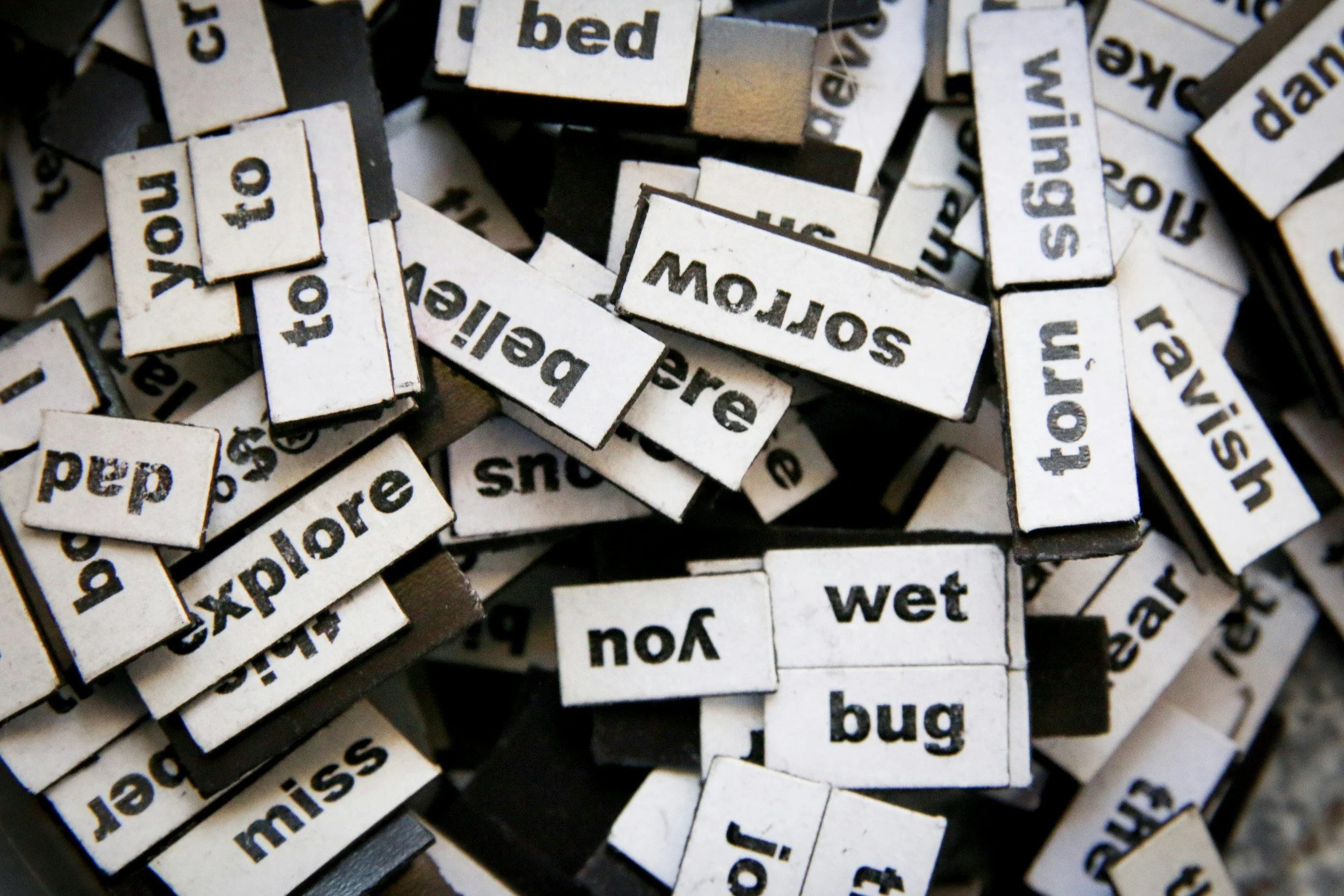
In the world of copy editing and line editing for fiction and creative nonfiction, professionals are moving away from attacking anything unusual or not completely buttoned up with red pens. At the same time, there is one convention that seems to stick around. It may be time soon for people move away from an overly-prescriptivist view of dialogue tags. How to handle dialogue tags are a hard-and-fast rule in a space that is not supposed to have hard-and-fast rules. Rarely has much thought has been put into why.
It is pretty clear we are in an intriguing era for editing. Book people are moving away from always expecting buttoned up, “presentable” standard English so writers can access and convey all parts of themselves.
You are here to help, not to be the “um, actually” police. Why fuss over ending a sentence with a preposition? These are the sort of topics we don’t need to argue over. Comma splices? They don’t bother me, it’s all good. Splitting infinitives? To be even somewhat bothered by this sort of thing feels frivolous to most everybody nowadays. Am I going to be bogged down by sentence fragments in a novel? Not a chance.
If you are editing a memoir or a fiction piece, the author—quite rightly—won’t appreciate attempts to convert a client’s historical fiction novella about a switchboard operator hungry for love into verbiage appropriate for a letter to the homeowner’s association disputing code ordinance fees.
The most key goal of a line editor or a copy editor is to alleviate confusion and help the existing writing strengths of a manuscript shine brightly. This is hardly news to the audience for a blog post about dialogue tags.
Fiction and creative nonfiction copy editors make possible juicy, bingeable fan favorites you love or the crisp and bold literary pieces you treasure. They make the book easy to pick up and hard to put down again.
They toss out or question distractions and mistakes. They protect a reader’s much overtaxed, vulnerable attention like the story’s troubled, rather tired bodyguard.
Amy J. Schneider, a copyeditor who can boast of a portfolio of down-to-Earth self-help guides, chilling suspense, and whimsical fantasy, wrote a guide to her life of work. She writes that “the copyeditor is like a continuity supervisor on a movie setup…the copyeditors job is to ferret out these errors and help the author eradicate them so they don’t pull the reader out of the story” (14).
Schneider makes it clear that copy editors need to strike a balance. They should not eliminate discrepancies simply because they are nonstandard. “Don’t fix it if it is intentionally broke,” she cautioned. “Overly pedantic copyeditors are the bane of the fiction author’s world. Don’t be one” (10).
Hold the phone? Hold the ponies in a stall right now, friend! Schneider cannot ‘caution.’ That is not an acceptable dialogue tag. There are no two ways about it. Using language in this way is simply not allowed, even though it is immediately understandable to someone with a native or intuitive grasp of English. Everyone listening knows what I meant, but that doesn’t seem to matter in this day and age.
While we weren’t looking, one specific wordsmithing convention took a dramatic, inviolable hold on book people everywhere, even as these same professional sing the praises of nonstandard English. Somehow, fussiness over use of unconventional dialogue tags has become the most pampered of editors’ sacred cows.
I believe fussiness about dialogue tags will become a zombie rule somewhat soon. Zombie rules, or outdated grammar and syntax rules, are proof that language use is always in flux. Not only does how we speak shift overtime. Assessments of what is and is not acceptable language use transforms over time. Former no-brainers for grammarians like “don’t ever end a sentence on a preposition,” and “don’t split infinitives” have dearly departed from us. I am confident that current sensibilities surrounding dialogue tags will follow its predecessors eventually to zombie law cemetery, even if it will take a decade or two to fade out.
To the uninitiated, a dialogue tag serves as a link between dialogue and the rest of the sentence the dialogue finds a home in. It often establishes who was speaking and commonly gives off other indications about what is going on—such as the speaker’s mood or how the words were said.
The most conventional, most ubiquitous dialogue tag is “said.” Dialogue tags can convey dialogue delivery, such as with “screamed,” “shouted,” “whispered,” and “muttered.” Other mainstays include “asked,” “claimed” or “questioned,” which are words rooted in how dialogue is an exchange of thoughts.
Bottom line, the most accessible dialogue tags have direct, no-nonsense ties to how people physically speak or how people think their thoughts. Many, if not most, copy editors (and a fair portion of editors besides) see these conventional dialogue tags as the only way to go. At least a few of these same professionals love Kormac McCarthy and James Joyce somehow, as well.
Don’t get me wrong, there’s are several dozen “acceptable” dialogue tags to choose from. A writer can get considerable mileage out of what is available and immediately acceptable to editors. Even so, a part of writing is about breaking boundaries and exploring new experiences— finding the puzzle pieces that fit just right into what a writer is trying to convey. Bending the rules when it comes to dialogue tags may just be what the piece needs.
Unusual Dialogue Tags Cut Fluff
If I say in your face, “go away,” you know I am talking to you. “Go away!” is understood to actually mean “(You) go away!” In the same frame of mind, consider…
“She is wearing makeup, dingus,” Lucy rolled her eyes. “Lots of it, in fact. I can’t believe my own dear little brother can’t see that—like you’re some 4chan basement dweller.”
It is pretty snotty to retort to such a sentence with “You can’t speak by rolling your eyes.” Such a statement is true, but I thought bookish-types liked writing that cuts to the chase. Don’t play dumb. You knew who was speaking and what the author meant. This unusual dialogue tag succinctly nails down how Lucy said her statement without more hokey adverb choices instead. Switching things to “Lucy said while rolling her eyes,” mars the sentence. It draws attention to the fiction as fiction. If ‘said while’ is added, it renders the readers more aware that we are staring at marks on paper rather than learning a story.
Some editors would expect this fix instead:
“She is wearing makeup, dingus.” Lucy rolled her eyes. “Lots of it, in fact. I can’t believe my own dear little brother can’t see that—like you’re some 4chan basement dweller.”
You can’t speak by rolling your eyes. That is so vitally important.
But, isn’t it harder now to attribute the dialogue to Lucy as intended instead of easier? Following the rules here just makes things more complicated for no reason. Even if the change only amounts to replacing a period with a comma, there is a shift. A shift backwards, I think.
Other Mediums Mess with the Act of Speaking and Being Heard
Unconventional dialogue tags often specialize in what is happening to parts of a speaker’s face outside of the mouth, what is going on in the speaker’s body, the energy in the room, or the relationship the speaker maintains with others. Part of the reason I am pulling for less stuffy handling of dialogue tags comes from my love of comics and poetry. The wide range of experiences these two storytelling modes specialize in can seep into prose as well if we actually allow it to.
In comics, there are so many different choices that alter how a piece of script is seen. From typeface to caption shape to character “framing” and “blocking,” comics writers have option after option to give a piece of text a whole host of different connotations. A sparce, simple “I’m fine” can be accessorized in all sorts of transformative ways.
In tiny text with cramped letters, a reader can surmise the speaker is whispering or does not have confidence. If the “I’m fine” text is bordered with flames, some sneaking suspicion tells me the speaker is not happy. Panel composition and facial expression determines whether this fiery passage is a brash expression of confidence or a homicidal warning—as well as how much danger the speaker’s adversaries are in. Whether the threat was delivered with quiet venom or was yelled out loud could also be customized through clever art direction.
There are so many bright, colorful options. More speech in prose books can be affixed to the world around it with flair, whimsy, and an openness to ambiguity. Imagine writing a novel in-verse and wringing your hands over conventional use of dialogue tags. Following convention would make most lines unwieldy and awkward. Ideas would not cascade in sequence in the way that best accommodates the comfortable, snug magic of contemporary free verse.
Writers Elsewhere “Get Away with It”
Words matter and editing matters. No one doubts that. Reducing complications in most instances makes the ‘seams’ of the story, the contrived aspect of staring at a piece of paper and enjoying the scripted daydream that comes pre-packaged with it, less conspicuous. Ruling out ambiguities as well can often make the resulting, more polished story a much more competent host to your honored guest. Using the immediately acceptable sort of dialogue tag continues to have its right time and place. Straying from this convention must be done carefully. The certainty, however, among people in this line of work about which dialogue tags are valid and which ones aren’t is what I take issue with.
Somewhere along the road, we book people decided there are two types of books. First, there is literary fiction alongside its cousin, the more polished, more flighty pieces of genre fiction (the ones that “elevate the genre” as it is so often said). Those brainier books get to be new and strange and ephemeral in their expression. For these golden children, quotation marks are optional and overstuffed paragraphs are fine. The tiniest glimmer of guidance for the reader as to what is going on is acceptable so long as much deeper is afoot.
In contrast, normal, more everyday ‘girl-next-door’ stories must follow pretty much every rule at all times with only minor affordances begrudged here and there. They are popcorn movies in print form and ought to know their place. Accessible storytelling can have a bit more flavor than it is currently allowed to have. A story does not have to be Finnegan’s Wake to take a chance or two.
Allow for the occasional unconventional dialogue tag. It will be ok. If these strange dialogue tags are all over the draft, slashing and burning them will only lead to clumsy, uninspired replacements.
Many Rules Are Made to Be Broken—Most Do Still Have Some Purpose
Focus entirely on if the unconventional dialogue would lead to excess confusion. “Excess” is the key here. This isn’t a manual we are working on, here. Is it truly clear who is talking? In a group setting, could the dialogue in question be attributed to another character present rather than the one intended. Is it possible that the figurative in your unconventional language could be read as literal? A ghost character probably shouldn’t metaphorically dissipate or float away. A plantlike being probably shouldn’t metaphorically wilt. A sentient crystal shouldn’t metaphorically shatter. Warriors shouldn’t battle with words before coming to actual blows.
By far, the most common, most serious problem unusual dialogue tags can cause is rendering it unclear who is talking. Is the character grimacing the one awkwardly giving the bad news or the one poorly receiving it? One fix is a more macro sort of thing. Clearer characterization elsewhere overall would make the answer to the reader intuitive. Revising the sentence immediately before or after may be the root of the offending confusion, as well. Having characters refer to themselves by name can help, too.
“Mom, you’re the best ever,” Lucy glittered as she pranced around the house feeling like a little kid again with her childish talk. Her dear mother braved the notoriously difficult baked Alaska recipe just for her daughter’s birthday.
Without this character addressing her mother by name, it may be hard to discern that Lucy is talking. But there is more than one fix out there. There is more than one way to skin a cat. It is much easier to reject a nuanced manuscript problem and put a Band-Aid on it rather than truly sit with the issue and sus out a more comprehensive solution. I just wanted to rattle this binary between acceptable and unacceptable dialogue tags. The difference doesn’t seem nearly as sturdy as I was promised.
Unusual Dialogue Tags as Figurative Language
Unusual dialogue tags are a form of figurative language. It is often best if the figurative language is so common and so flush with the way we go about life it doesn’t even feel figurative anymore—like how you might say “I see” when you’ve grasped a concept or say “That book is rather light” when the story is easy or pleasant.
Sometimes in books, a character’s eyes “darken.” Eyes don’t darken, but if your eyebrows are frowning, the eyes look darker. The grimace brings emphasis to and intensifies the shadows around your eyes.
Let’s incorporate that little tidbit into a piece of dialogue, perhaps:
“Another stunt like that—” Gillian darkened while clutching her clearly quite stupid charge close. “—is an easy way to get yourself killed, little man, along with everyone else here.”
Context tells us who is talking, and this dialogue tag clearly outclasses other potential replacements like ‘roared’ or ‘said with venom’ or whatever. No replacement I can think of delivers quite the same mood I imagine for this scene. ‘Darkened’ though, makes it clear Gillian cares and that Gillian is serious and that Gillian is genuinely wary.
Unconventional Use of Dialogue Tags Can Give a Fuller Picture to the Landscape
Now it was known for certain there was a mole in the most important case in this department’s organized crime efforts. The chummy mood at the precinct was only getting friendlier and friendlier.
“Now, my dear, stupid children—”.
At just the right moment, the door slammed opened and shut as if the thing was built just to undermine the chief.
“SIT DOWN RIGHT NOW OR I’ll BLUDEGNEON EVERYONE TO PIECES WITH THAT DOOR AND MAKE YOU BURY THE BODIES,” the chief scorched, his vision likely as red as his beety face. He singed flesh wounds into everyone—and we are no shrinking violets.
Threatening someone in a police department was probably illegal but the poor old man has been through enough today and might just make good on his threats if pushed.
This unconventional dialogue tag completes the picture of the police chief’s hot anger and its likelihood of fire to catch on the surface of any resistance he feels at the same time. This is clearly a volatile situation full of potential for emotions to get carried away.
Unconventional Use of Dialogue Tags Can Draw Upon a Reader’s Knowledge in a Lovely Way
Sandra Strand’s first day at Little Daisy Go-and-Grow Center had come with a few hitches.
Miss Sandy smoothed over her maxi-skirt while trying to not to think too much about how its hem was marred with bite after bite from “safety” scissors. All while another charge needed help with his insulin pump, no less. The pint- sized culprit took refuge under one of the tables.
At least one of this vandal’s peers would not stand for this treatment. “It is not nice when we hurt other people’s safety or learning,” the champion of justice toddler-mimicked in a coached, clearly borrowed cadence. “So…. YOU’RE BAD!” lil’ bossypants shouted right in his little face.
We have all heard the specific way someone young says something that was given to them wholesale from elsewhere. This unconventional dialogue tag draw up an exact mental image of how this little girl talked and tells you a whole lot about who this character is as a person.
Unconventional Dialogue Tags Can Reveal More About the Character’s Emotional World
“Are you sure it’s him?”, Molly deflated, clutched the shiny pins and dog tags in her little hands. Just 7 years old with her tear-ridden face and her stock-still look, her posture may as well have been bracing for a real impact.
“Are you sure he’s….gone? You need to check again. You have the wrong one, for certain,” Molly bargained. “You have the wrong guy, I’m certain of it,” she said, wilting. Saying this lie didn’t protect the way she had hoped. It didn’t do much good for Ben, either.
Here, the use of ‘deflated’ and ‘bargain’ show the evolving, constantly shifting manner this little girl is traversing as she comes to terms with her brother’s death. Readers are quite accustomed to seeing split-second shifts in emotional response on film and in comics. Following along with these unconventional, more malleable dialogue tags seems the best way to allow such a staple of other storytelling forms a place in the world of prose.
Readers Do Without Dialogue Tags Oftentimes Nowadays—They Can Stomach Non-standard Ones
In contemporary books for general audiences, it is more common to see the dialogue tags up and disappear rather than unconventional ones. I’d say it is more common than not that, if a writer wants to convey quick lobs of dialogue back-and-forth, that she would nix the dialogue tags and have context alone indicate who is talking. The only help is separating each passage with a new paragraph.
“Like this?”
“Yeah, exactly like that. Like we’ve seen in books a thousand times.”
“Oh, maybe we need to get back to the regular text.”
“Oh, yep, let’s head back”
Nowadays, novels in verse are far from uncommon and epistolary-type novels incorporate everything from emails to bank statements to text messages. On top of this, most everyone makes it through high school reading at least one play in script form.
Bottom line, audiences are better equipped to ascertain connective tissue between dialogue that does not stand up, dance, and announce its presence than they are given credit for.
Drive My Engagement Up—Where’s My Strongly-Worded Letters?
Perhaps some will reconsider at least a little of their practice? Just as likely, I will get hate mail crafted with impeccable syntax and written with grammar which is completely beyond reproach. That would make for an interesting read.
In writing, rules can be broken so long as the rules are considered. Know that a dialogue tag not rooted in thought or speech may be objected to on principle. More importantly, they may not be a practical idea in all contexts. At the same time, though, dialogue tags cannot be this magic exception to creative license. Choosing to be a stickler over one thing and one thing only isn’t sound logic.
Of course, it is easy for me to say all this. When it comes to books, I am a big picture thinker more than anything else. I have copyedited and line edited, and it does access a different part of your brain than developmental editing. My bread-and-butter is developmental editing and market research, but so many of the independent editors I know do line edits or copyedit. I am just wondering why this issue is such an open-shut case for many people.
“Who died and made the pedant behind this rule boss,” Rachel chafed indignantly. “Although, there is a point to be made here,” Rachel deigned to concede. “The fundamentals are, well, fundamental for a reason. Straying from the more accepted dialogue tags is always a little risky, but everything we ever do is a risk,” Rachel said, conceding for real this time. “But like most things, ‘it depends.’ It seems like pretty much everything boils down to ‘it depends’.” Rachel wrapped things up, a bit worried about her overdeveloped capacity to argue with herself.
Children’s Classics to Take Another Look at As an Adult
Whether reading them for the first time or revisiting familiar territory, all 5 of these books are engaging and heartfelt reading experiences that still speak powerfully to the lives of grown-ups. If you are a fan of serious literature, these offer a similar experience, just shorter and more tightly woven. If you are a parent of young kids and experiencing kids’ stuff overload, these books will still satisfy you. You react to them as a whole person rather than with just the caregiver aspect of you.
Whether reading them for the first time or revisiting familiar territory, all 5 of these books are engaging and heartfelt reading experiences that still speak powerfully to the lives of grown-ups. If you are a fan of serious literature, these offer a similar experience, just shorter and more tightly-woven. If you are a parent of young kids and experiencing kids’ stuff overload, these books will still satisfy you. You react to them as a whole person rather than with just the caregiver aspect of you.
We Are Condescending, Unimpressed Little Weirdos When We Talk About Children’s Books
During my master’s degree in children’s literature, the initial digging around to get a start on research papers always held interesting surprises. There were gaps in coverage in odd places. Don’t get me wrong, no area of literature has ever been completely and utterly uncovered. But, in my line of work there were bald spots everywhere.
Some books like Little Women and the Harry Potter series got extensive coverage. On the other hand, household names like Old Yeller or Where the Red Fern Grows got basically no coverage.
It was like one lone ant would find a crumb of literary criticism to work around and call over the friends. I’ve even met in person some of these pioneering ants ushering their friends to lunch alongside them.
If I was using a database or library search engine, I’d keep on coming across the same sort of fluff. Strange fluff—but fluff, nonetheless.
If a book or article started out with a cheesy, lengthy “kids books are great and worthwhile actually” introduction, I could safely assume the actual analytical content would likely have little substance to speak of. The children’s novel I was researching may have gotten a mention on the back cover, but this search engine result is a dud. Outside of platitudes like “kids books teach literacy” and “kids books teach kids how to persevere,” here was a dead end. There was an echo of “I don’t believe in myself” behind the pages of these strange books and journal articles.
Conversations as complex and multifaceted as disability would start and end by discussing Wonder and leave things at that. Although not the perfect analogy, that is kind of like focusing solely on Uncle Tom’s Cabin in an article about African American literature and thinking discussion begins and ends there.
I won’t reference it directly to protect my fledgling career and because everybody makes mistakes, but the low opinion professionals had of their own subject matter was clear at times. An academic journal article blundered while calling out a middle grade/YA series as sentimental, overly-emotional garbage to make a larger point about low art. Her peer review team didn’t notice she consistently called the main character of series she was maligning by the wrong name. It’s more like the author couldn’t get a feel for the made-up culture’s naming conventions solely from skimming the first book in a series of several dozen books, but the point still stands. No one caught it.
The strange antics happening in children’s literature academia makes sense. Academic study of children’s books is among the youngest disciplines out there aside from video games and the like. It feels frivolous and navel-gazey to many. Like its study is an exercise in being cutesy, genteel, and self-involved.
Good children’s books are not mere bribes to get children to learn how to read or to hypnotize them into washing behind their ears. Children’s books are the most innovative area of the book world, bar none. The most widely read and mostly fondly remembered stories are kids’ books. They reflect all people—not just the young. They are a snapshot of who we are and who we want to be. Lots of adults would benefit from reading more children’s books and quite enjoy themselves doing so.
You Are Not Miss America. This Doesn’t Have to Be About the Children of Tomorrow.
If you’ve been disappointed with how many books you’ve finished this year, embracing more kids’ books into your TBR can really help you get back into the swing of things, even if your go-to are books for adults. (For the record, I’m not out here knocking books for adults). This isn’t about healing your inner child or connecting better with your niece—even though both might happen.
Books for young people are often crisper and better plotted than their grown-up counterparts. Kid’s books are often shorter and less convoluted, so it is easier to start and finish a story and get your momentum building. They are often easier to follow along and listen to while, say, cleaning the house or painting your nails. They make for great beach reads if you able to put up with some light teasing.
Even so, many great children’s books are not the best fit for the average adult reader. The Cat in the Hat and Frog and Toad Are Friends are powerful children’s books, but it takes a certain breed of grown-up to appreciate them.
Perhaps you aren’t in the mood for a coming-of-age story, either? Sometimes, memory lane seems a tad too painful or too same-old-same-old. Sometimes, gaps between who you were and who you remember being get in the way too much to see the value in some books. I suspect this disconnect is most common for easy readers (the first books you read on own) and middle grade books (the books in-between easy readers and books for teenagers). Most of us would rather forget middle school and much of elementary school. I am with you some of the time.
I have plenty of suggestions if you just want a laugh and a masterclass on writing to kids. I quite love Gordan Korman and Dan Gutman’s books for 7th grade boys (and some girls), but I am guessing they are outside of what you, mature reader, want. If you are a teacher or a librarian, the Jude Blume books or Fancy Nancy are quite marvelous. They may be a harder sell if you are just a regular person trying to pass a Summer afternoon. A good kid’s books caters to kids first and anyone else eavesdropping second, if at all.
On the other hand, there are many children’s books out there that could make a great companion to a boozy book club or accompany you quite well on your next plane ride or vacation stay. All children’s books discuss growth a little, but books for kids don’t need to keep all of the focus there. Children’s books discuss everything.
They discuss what community means. They cover how to deal with pain and what it means to even exist. They are heavy stuff in simple wrapping. Here’s a few books you should give a second look if you read them as a kid or should pick up for the first time if you haven’t.
Fair warning ahead. With the exception of some mysteries or books where the plot twist really and truly feels like a startling surprise, I don’t believe in spoilers. With a few exceptions, a good story cannot be spoiled. These books are so famous, you likely know how they end anyway. Perhaps you have even been staying away since you feel you’ve already got the gist of them from afar. These books are definitely worth the journey even if you know the destination.
Charlotte’s Web by E.B. White
E.B. White was a man of many talents. He was half of The Elements of Style by Strunk & White, the most influential grammar and style book ever written. At the same time, White became an accomplished humor essayist with a breezy, unobtrusive wit. You can see a lot of White in both Charlotte and the overall contours of the book if you pay attention.
In Charlotte’s Web, a farm girl name Fern’s grandstanding saves a pig name Wilbur from being killed. This pig goes on to befriend a spider, who performed a parlor trick in a simple country town to save the pig from being slaughtered as an adult.
This book carries a rather difficult truth. To live often means you will be disappointed. To live means you will quite often lose. To live means others will let you down.
Charlotte saves Wilbur but must die alone in an unfamiliar place because of it. It feels unfair that she was the only one in Wilbur’s social circle capable of helping out. Fern, previously so enamored with Wilbur, blows him off to hang out with a boy. Wilbur is kind of stupid.
You have to find the joy in the same things and make the best of any pain and discomfort that comes your way. It’s an advocate for positive pessimism before the term was even coined.
As an added bonus, this book has some of the most easy-flowing prose I’ve ever read. It’s like the thing is being beamed directly into your brain. It’s lovely.
Where the Red Fern Grows by Wilson Rawls
I spoiled Charlotte’s Web, but I have a feeling the reputation of both it and Where the Red Fern Grows precede them. Where the Red Fern Grows is about a country boy named Billy living on his farm on the edge of the woods. He loves both his home and his beautiful hunting dogs, Little Anne and Big Dan.
If you know anything at all about this book, though, it is how the book ends.
It’s the two-in-one variant of the ‘dead dog book’ genre. In popular culture, this book and its cousin Old Yeller exist to cruelly introduce grim, untimely death to unsuspecting grade schoolers.
Where the Red Fern Grows is not just about death. It may be my favorite book for this age group.
The book has simple prose that is smooth sounding but in a slightly different key from E.B. White. The book paints a natural landscape without inauthentic pastoral musings or unnecessary ornaments. The story is a deep well of compassion and care. Rawls is a champion of the art of noticing. Cry, but only if you won’t be cowed. Believe in ghost stories, but go on with your life. Admire the woods but always remember it doesn’t merely exist just for your scenery.
In grad school, I found it uncanny how little this book gets covered when it has such an intriguing place in the history of children’s literature. It fell through the cracks. Without anybody taking much notice, Where the Red Fern Grows has, perhaps, quietly held the status of ‘most widely read piece of Native American literature’ for decades now. Both the author and the main character were mixed-race boys growing up on Cherokee land outside of Tahlequah. Why he isn’t discussed alongside Louise Erdrich, Leslie Marmon Silko, and Sherman Alexie, I don’t know.
Many other aspects of the personal life of the author left their impact. In the bones of Where The Red Fern Grows are the impression of a one-room schoolhouse, a meager home library, and hours upon hours spent outdoors. Rawls worshipped his copy of Call of the Wild. Instead of writing childhood stories on paper, he told his stories aloud to his own beloved dog.
This book is beautiful read aloud. It has the cadence of the best yarn spinner you’ve heard in real life. The book goes paragraphs and paragraphs without a comma, but nothing feels choppy or takes you out of it.
A book can only break your heart if it has already won it. Where the Red Fern Grows is a love letter to a man’s childhood home and a eulogy for the family togetherness he felt there prior to the Great Depression, which scattered due to financial hardship at that time. There is a deeper well of grief here than just slain dogs, even though they are damn good dogs.
Keep your tissues handy, folks.
The Wind in the Willows by Kenneth Grahame
Even as a lover of children’s books, I made a conscious effort to avoid The Wind in the Willows for years. You know how sometimes you’ll come across a book and have the very strong assumption that you won’t like it. I was judging a book by its log line instead of its cover, I guess. I felt this hunch about The Wind in the Willows, and I was wrong. Even though most of my concerns regarding the book turned out to be true, something about the delivery made me end up liking the book anyway.
I couldn’t get over this general vibe I got from the vantage point of a long distance. An early-20th century middle grade book about English woodland critters in three-piece suits? Where the only concern of the day, I imagine, may be whether enough cucumber salad has been brought for an appropriate luncheon? Will a proper boat for the excursion be secured? One animal friend wants to read a tome and another wants to play the flute poorly. What so ever shall we do?
There was something so overtly twee and precious about it. Its reputation left an impression that didn’t feel quite real. And my assumptions were true in some sense. This book features plotlines that are non-issues for people who aren’t extra and aren’t dramatic. This book has excellent life lessons. One of this book’s lessons is, “People are messy and stupid. And the world is weird and scary. That’s funny.” Enlightening!
I assumed it was too buttoned-up to be tacky-yet-charming. That it was too innocent to be truly silly. That’s where I went wrong. This book is hilarious.
In this book, a bunch of semi-anthropomorphic animals get into weird, petty nonsense. It’s not unlike the goings-on in the group chats of your not-quite-toxic friends and family. One day, its debates over whether or not the gang has actually seen a wilderness demigod. The next, it’s helping a friend battle their addiction to crashing stolen cars into other people’s property. As needed respite from this drama, this book also has some of the most satisfying descriptions of food ever put to paper and a very cottagecore atmosphere.
I think telling you more about what actually happens The Wind in the Willows won’t do you any good. This book is about the little things. The little things that brighten our days, that trip us up, and that scare us a tad.
Alice’s Adventures in Wonderland by Lewis Carroll
I should, in good conscience, have each one book on here where childhood is the point of focus. Even though drugs show up, I don’t think this story is about drugs or about mental illness or about this or about that. It is about the lack of agency so many kids feel.
They are shuttled from place to place. They are expected to know the rules of the game without being told. Nothing in Wonderland is straightforward, and that is all Alice’s fault somehow. Still Wonderland, with all its frustrations, has charm to it anyway. Each day holds its own new and exciting discovery, even if Alice will inevitably receive a ‘tsk-tsk’ about something or another she did wrong.
You know about the white rabbit and about the mad hatter and about the red queen and about the drink that makes you shrink. Countless movies and video games and dorm room posters has taught you that. You should still read the book.
The best thing about Alice’s Adventures in Wonderland comes from Alice’s own words and thoughts. She remembers the overall cadence of her brother’s Latin lessons rather than the content. She sees no use in talking about what happened yesterday because it is in the past. It is hard to pin down exactly who she is, because she is a different person every day, which is what it means to grow and change in this crazy world.
If you have an Alice and Wonderland-themed tea party, there better be soup.
Goodnight Moon by Margaret Wise Brown
Hey, stop laughing at me! At the very least, do the polite thing and snicker at me all the way in the back, ok.
Am I ridiculous? Yes, but that is for other reasons.
Even though a dramatic reading of the book may take 7 minutes if you dawdle, with the right mix of people you can easily spend 3 or 4 times that amount of your day talking over this book.
Margaret Wise Brown may just be my favorite midcentury poet—hiding in plain sight as one of the underappreciated greats just like Wilson Rawls. She has this great ability to infuse narrative into simple, short poetry—all while you cannot see the beams or the joists.
Her work is just as airy as Ezra Pound but with more heart. She has the zest and glib of Allen Ginsberg but without the isolating, more insular side of being an adult. Plus, there are pictures!
It is deeply, deeply strange how popular this book is. There are some books which—because they are so popular for so long—we forget what makes them special in the first place. It is sort of like if Blood Meridian was the most well-known story to do with Westerns or if Synecdoche, New York replaced the usual suspects as the world’s best-known movie. For no clear reason, some of the most experimental literary fiction in the children’s picture book world are household names. It is a strange anomaly about life on planet Earth.
When something is groundbreaking but so well-known, it feels a lot less remarkable.
Goodnight Moon may be seen as the quintessential cozy baby book, but is precious only in theory. It is an unsettling, funny, odd journey through the often quite scary action of surrendering yourself to sleep
Mac Barnett sings the praises of Goodnight Moon, both in his new book Make Believe: On Telling Stories to Children and in his collaboration with fellow kid lit author Jon Klassen for the Looking at Picture Books blog. More eloquently than I ever could, he lays out just how startling Good Night Moon can be.
He writes, “Goodnight Moon contains all those dark currents that run beneath bedtime—the bizarreness of our flickering consciousness, the fear of the unknown, the chthonic ritual of it all…We literally look into the abyss. And then we speak into it. We bid it good night” (Make Believe, 68).
Pair Goodnight Moon with Barnett’s book or In the Great Green Room, a biography by Amy Gary about the full, intriguing life of an underappreciated genius. Or a few pair it with a few more of Brown’s powerful stories. I especially suggest The Runaway Bunny, The Important Book, and The Dead Bird.